
Are we just passing through?
Salazar-Miranda, Arianna+, Zhuangyuan Fan+, Michael Baick, Keith N. Hampton, Fabio Duarte, Becky PY Loo, Edward Glaeser, and Carlo Ratti. "Exploring the social life of urban spaces through AI." Proceedings of the National Academy of Sciences, PNAS 122, no. 30 (2025): e2424662122
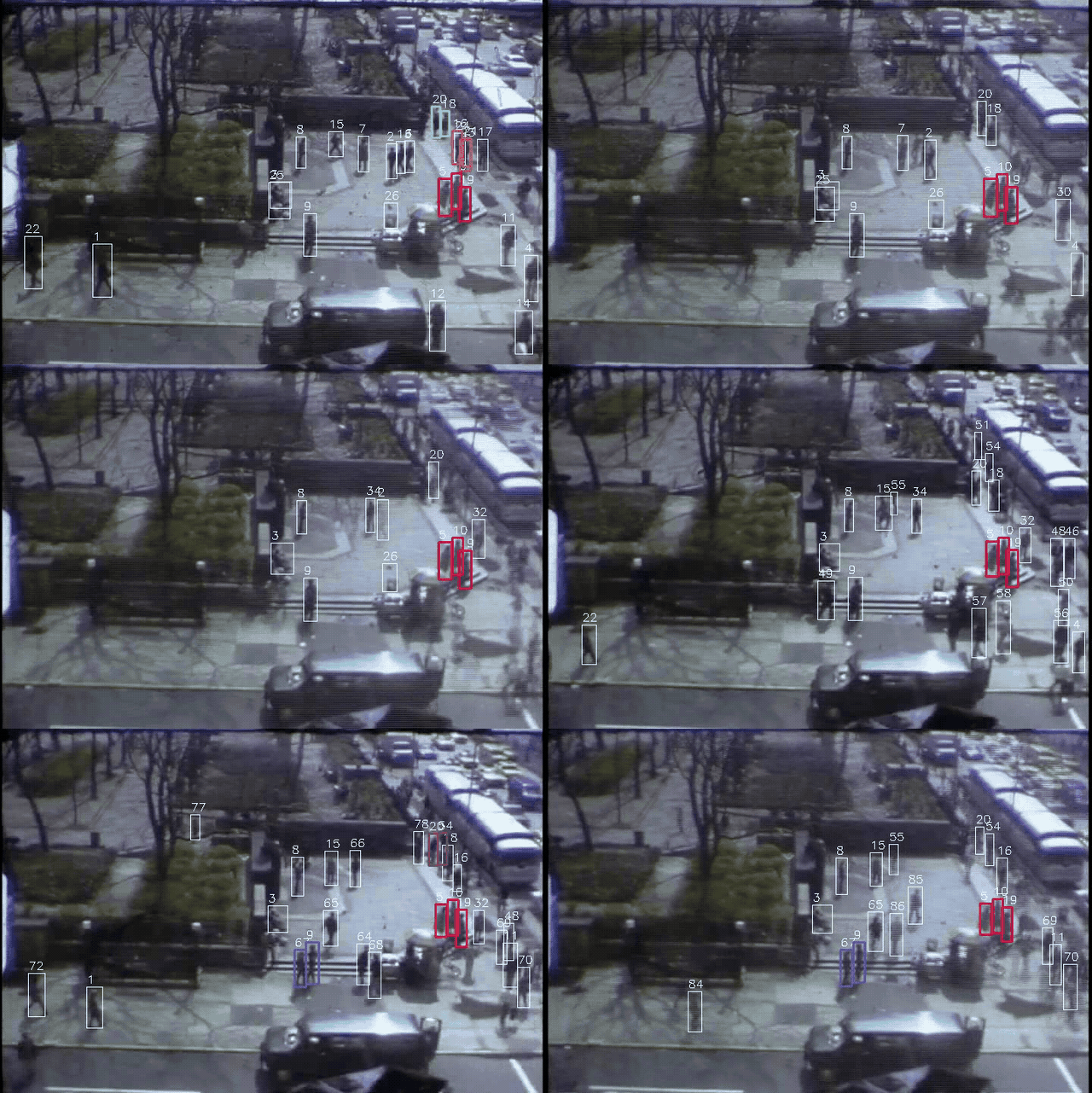
Urban public spaces have traditionally served as places for gathering and social connection, shaping the social fabric of cities. This study reveals important shifts in pedestrian behaviors over a 30-y period in four US public spaces. By using AI and computer vision to analyze historical and contemporary video footage, we observe an increase in walking speed and a decrease in time spent lingering, along with fewer group encounters. This trend suggests a growing perception of city streets as corridors for movement rather than spaces for social interaction. These findings highlight a changing urban dynamic, where efficiency increasingly shapes public space usage, potentially impacting social connections and the community-building role of these environments.